Time Tracking Law 2026: Guide and Updates for Compliance
What your company needs to know today about the time tracking law:
What your company needs to know today about the time tracking law:

The Time Tracking Law, framed within Royal Decree-Law 8/2019, was created with a clear objective: to guarantee compliance with working hour limits, ensure payment for overtime, and facilitate employee rest periods.
In practice, it obliges companies to keep a daily record of all employees’ working hours, indicating the exact start and end time of work. However, regulations have evolved, and traditional methods are no longer sufficient to guarantee the transparency required by the Ministry of Labor.

The imminent regulatory update planned for 2026 marks a before and after in how HR departments must manage time. The goal is to eliminate fraud and data manipulation.

No more handwritten sign-in sheets and editable spreadsheets at the end of the month. The new law explicitly prohibits the use of paper and Excel, demanding a mandatory transition to digital platforms. The system must ensure that the record is unalterable and that neither the company nor the employee can manipulate hours retrospectively without leaving an auditable trail.

Digitalization is not just a technological whim; it is an accessibility requirement. The Labor Inspectorate, as well as union representatives and employees themselves, must be able to access records in real time. A digital system allows these reports to be generated instantly, passing any inspection without stress or bureaucracy.
Non-compliance with mandatory time tracking is no longer a minor risk. With the update of the law, sanctions have changed from being global to being calculated per affected worker, exponentially multiplying the financial risk for companies.
Example of non-compliance:
Failure to make the record available to workers or unions.
Example of non-compliance:
Continuous errors in the record or discrepancies in the data.
Example of non-compliance:
Continuous errors in the record or discrepancies in the data.
Adapting to the law shouldn’t be an administrative burden. At Woffu, we transform a legal obligation into a competitive advantage, offering an all-in-one HR software that protects your company and empowers your team.
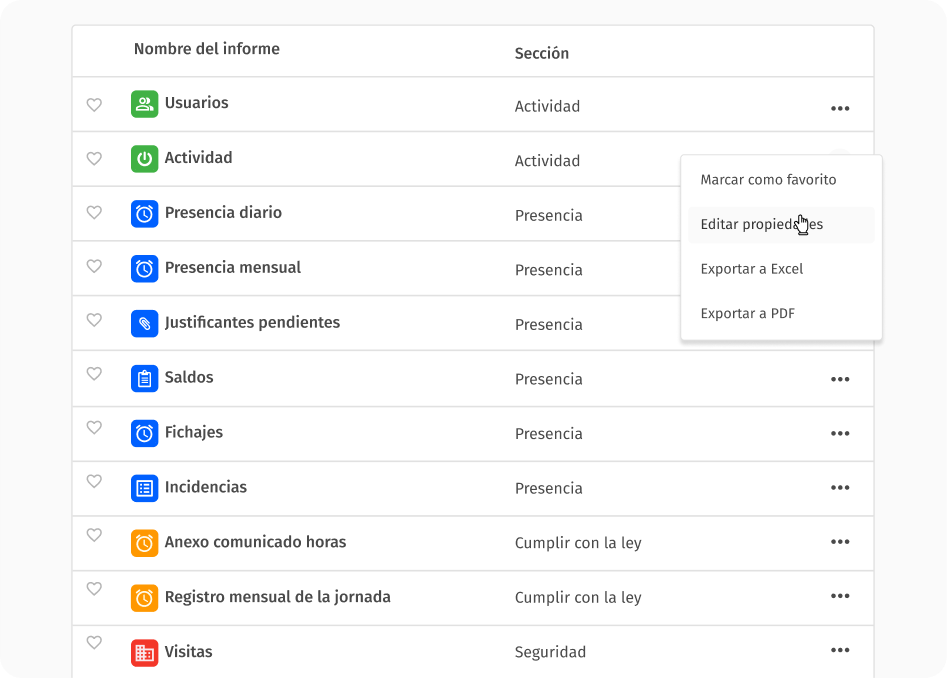
We guarantee the retention of records for the 4 years required by law, ready to be exported with one click for any Labor Inspectorate requirement.
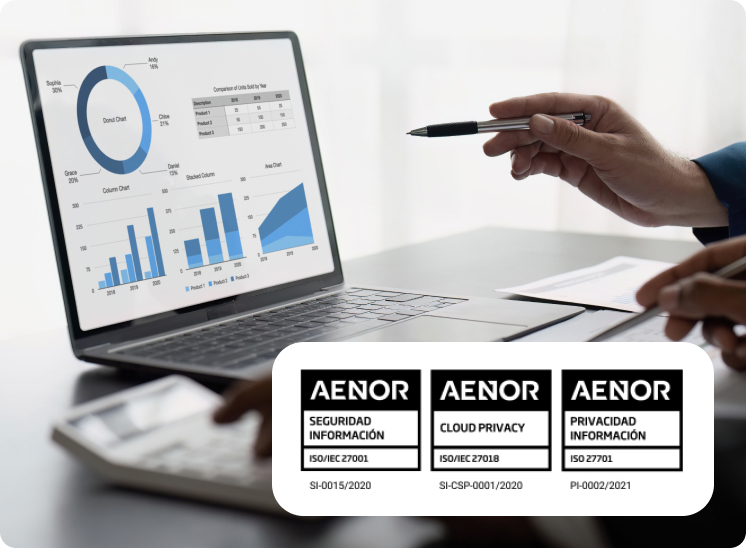
If an employee forgets to clock out, other software leaves the counter running and generates errors that HR must manually correct. Woffu stops the clock according to the theoretical schedule to avoid incidents and save you hours of management.

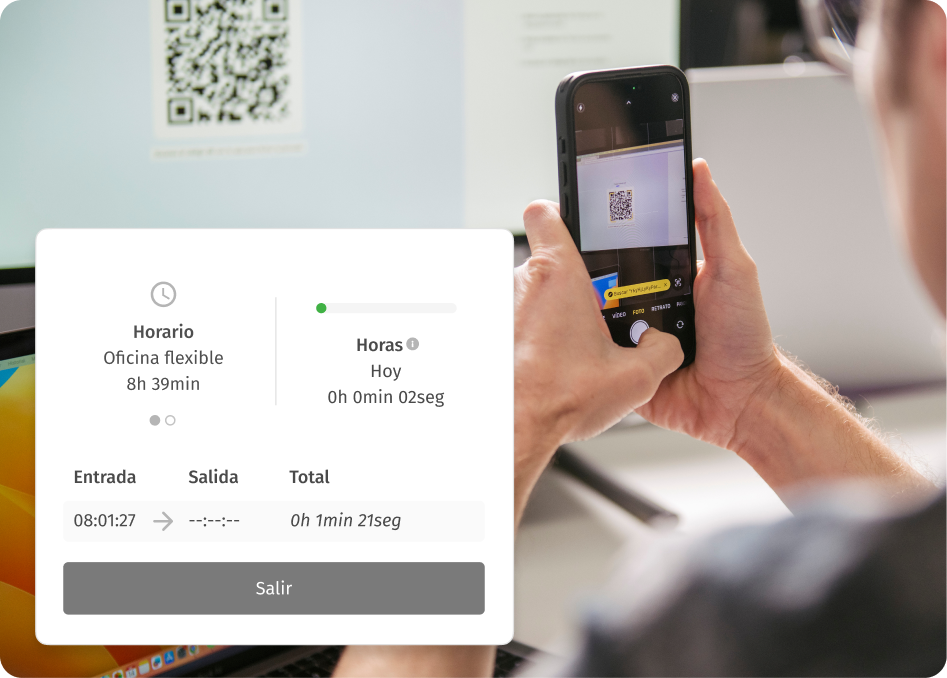
Whether in-person, remote, or mobile. Your employees can easily clock in/out through:
The entire employee lifecycle (holidays, absences, shifts, and time tracking) coexists in a single ecosystem, ensuring that actual and overtime hours are calculated automatically without duplicating manual work.
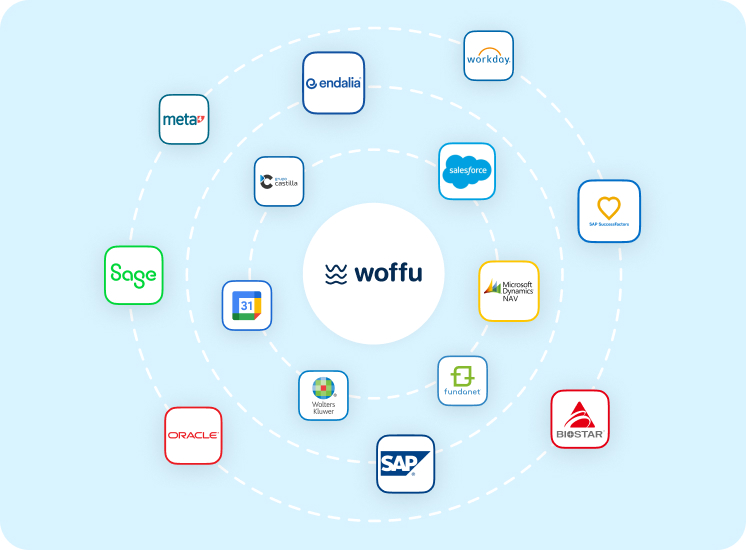
For your system to pass any inspection in 2026, it must strictly comply with this checklist:
The obligation is universal. It affects all employed workers, regardless of their working day (full-time or part-time) or modality (in-person, remote work, or mobile workers such as sales representatives or transporters).
The only exceptions contemplated by the Workers’ Statute are:
A specialist will show you the platform in action and you will discover why Woffu is the solution for you.

No. The new regulations explicitly prohibit the use of Excel, spreadsheets, or paper records. The Labor Inspectorate considers them invalid because they are easily manipulable. A digital and objective system is required.
Yes, if the company wants to deduct that time from the effective working day. A system like Woffu allows you to configure automatic breaks or require the employee to clock out and in for breaks, so that the calculation of hours worked is 100% accurate.
Forgetting does not exempt the company from its legal responsibility to keep the record. That’s why it’s vital to have tools like Woffu, which send push notifications to the employee’s mobile to remind them to record their working day, encouraging the habit and reducing incidents.
Implementation time may vary depending on the complexity of the company’s needs, but our goal is to guarantee a successful implementation within a maximum period of 21 days.
A good Onboarding service is essential because it ensures that the transition to our platform is as smooth as possible and that everyone in your company can use Woffu effectively from the start. This not only saves time but also maximizes the value you get from Woffu and ensures a positive experience for company members.